

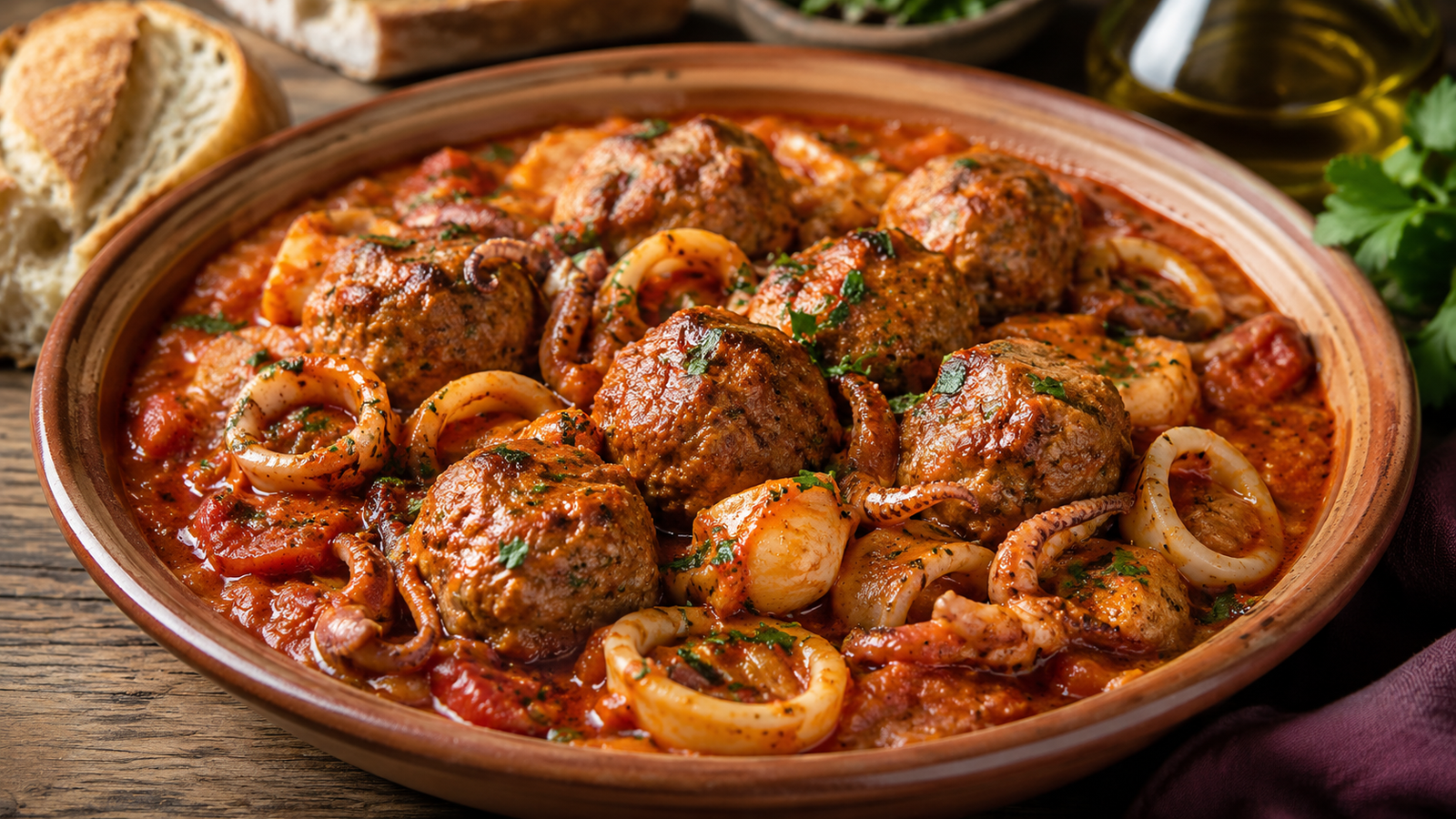
Searching for the best albondigas con sepia near me usually begins with a desire for something more memorable than an everyday meal. This traditional Catalan dish combines tender meatballs with delicate cuttlefish in a slow-cooked sauce, creating the kind of comforting plate that feels both rustic and refined. Known in Catalan as mandonguilles amb sípia, it represents a style of cooking where the richness of the land meets the freshness of the sea, making it an excellent choice for diners who want authentic regional flavor.
| Key Fact | Details |
|---|---|
| Focus keyword | best albondigas con sepia near me |
| Spanish dish name | Albóndigas con sepia |
| Catalan dish name | Mandonguilles amb sípia or mandonguilles amb sèpia |
| Culinary origin | Traditional Catalan cuisine |
| Cooking style | Mar i muntanya, meaning sea and mountain |
| Main ingredients | Meatballs, cuttlefish and a savory sauce |
| Common additions | Peas, onion, tomato, garlic, wine, stock and herbs |
| Ideal place to look | Catalan restaurants, traditional taverns and local dining houses |
| What diners should check | Current menu, freshness, sauce quality, reviews and availability |
What Makes Albóndigas con Sepia So Special?
At first glance, meatballs and cuttlefish may seem like an unusual combination. Once tasted, however, the pairing makes perfect sense. The meatballs bring warmth, richness and a familiar tenderness, while the cuttlefish contributes a mild marine flavor and a pleasant texture. Cooked together in a well-developed sauce, the two ingredients create a dish that is far more balanced than heavy.
The magic is in the sauce. It often begins with softly cooked onion and garlic, sometimes followed by tomato, wine or stock. As the dish simmers, the meatballs release their savory character and the cuttlefish adds a subtle coastal depth. Peas may be added for sweetness and color, while bread is often welcomed at the table because leaving sauce behind would feel like a mistake.
This is not a dish designed for hurried eating. It is the sort of meal enjoyed slowly, spoonful by spoonful, especially in a restaurant that values traditional cooking.
The Catalan Tradition of Sea and Mountain
Albóndigas con sepia belongs to the Catalan culinary tradition called mar i muntanya, translated as “sea and mountain.” It describes recipes that bring together seafood from the Mediterranean coast and meats or produce connected with inland farms and villages.
Catalonia has a long history of creating dishes that cross those boundaries. Rather than treating meat and seafood as separate choices, cooks combined them in stews, braises and celebratory meals. The result was food with deep flavor, built from local ingredients and practical cooking methods.
In this dish, cuttlefish is not simply added as decoration. It is an important part of the overall taste. Its delicate seafood character lightens the richness of the meatballs, while the meatballs give the sauce substance. The combination reflects the creativity of traditional Catalan kitchens, where simple ingredients become extraordinary through patience and skill.
For visitors exploring Barcelona or other parts of Catalonia, ordering mandonguilles amb sípia is a rewarding way to discover a dish that locals recognise as comforting, familiar and deeply connected with regional identity.
Understanding the Name Before You Order
One reason this dish can be difficult to find is that it may appear under different names. Spanish-speaking menus may list it as albóndigas con sepia, while Catalan menus are more likely to use mandonguilles amb sípia or mandonguilles amb sèpia.
The word albóndigas means meatballs. The word sepia refers to cuttlefish, a seafood ingredient related to squid but with its own texture and mild flavor. In a good version of the recipe, the cuttlefish should be tender rather than rubbery and should blend naturally with the sauce.
When looking for the best albondigas con sepia near me, checking both the Spanish and Catalan names can reveal more restaurant choices, particularly in Barcelona. A traditional dining room may not use the English description at all, even though it serves exactly the meal you are hoping to find.
What a Great Plate Should Taste Like
The best version of this dish begins with properly made meatballs. They should be soft and juicy, holding their shape in the sauce without becoming firm or dry. Many traditional preparations use pork, veal or a mixture of both, resulting in a rounded, savory flavor.
Cuttlefish requires equal care. If cooked incorrectly, it can become tough. When handled well, it is tender, gentle in flavor and a perfect companion to the meatballs. Every bite should offer contrast without one ingredient overpowering the other.
The sauce ties the entire dish together. It should have enough body to coat the meatballs and cuttlefish, but not feel overly thick or greasy. A sauce with onion, tomato, wine, stock and slow-cooked depth is often the sign of a kitchen that understands the recipe. If peas are included, they should bring a small burst of sweetness and freshness.
Most importantly, the plate should taste harmonious. It is not simply meat beside seafood; it is a stew where every ingredient has shared its character with the rest.
How to Search for the Right Restaurant
A search for traditional food deserves more attention than choosing the first nearby option. This dish is often served in restaurants that specialise in Catalan cooking, seasonal menus, tapas or slow-cooked home-style recipes. Because availability can change, it is sensible to confirm that the dish is currently being served before making a special journey.
Restaurant menus are the best starting point. Look for the dish under both language variations and pay attention to descriptions mentioning peas, prawns, rich sauce or traditional Catalan cooking. A menu that clearly identifies the dish is more reliable than a casual review written years earlier.
Recent customer photos and comments can also be helpful. A genuine serving normally appears as meatballs and pieces of cuttlefish resting in sauce, sometimes with peas or an additional seafood ingredient. Reviews may reveal whether the portion is satisfying, whether the sauce is memorable and whether the dish is available regularly.
For a simple decision before visiting, check the current menu, opening hours, reservation options, recent guest feedback, location and whether bread or side dishes are offered with the stew. These details can save time and help you choose a restaurant that matches your expectations.
Why Barcelona Is an Excellent Place to Try It
Barcelona is one of the strongest places to search for this classic plate because Catalan cooking remains part of the city’s restaurant identity. Alongside modern tasting menus and international dining, visitors can still find traditional establishments serving recipes built around stews, seafood, grilled meats and familiar regional combinations.
In the city, the dish may appear in a quiet family-style restaurant, a historic dining room or a tapas-focused place offering smaller plates. Each setting can provide a different experience. A generous main-course version may suit someone seeking a relaxed lunch, while a tapas portion makes it possible to sample several Catalan specialties in one meal.
The location also helps explain the dish itself. Barcelona sits close to the Mediterranean while remaining deeply connected to inland Catalan food traditions. Eating meatballs with cuttlefish there is not merely trying an unusual combination; it is enjoying a recipe that reflects the geography and history of the region.
Visitors should keep in mind that traditional dishes are not always available every day. Some restaurants rotate recipes, update seasonal menus or prepare limited quantities. A quick menu check or reservation enquiry before arriving is often worthwhile.
Traditional Version or Modern Interpretation?
Some diners prefer the classic preparation: meatballs, cuttlefish, peas and a rich sauce served with bread. Others may enjoy a modern version featuring prawns, a lighter sauce, refined plating or a tapas-sized serving.
Neither approach is automatically better. A traditional plate often provides the strongest feeling of Catalan home cooking, with generous sauce and comforting flavors. A creative restaurant version can highlight the ingredients differently, perhaps giving greater attention to seafood or presentation.
The key is to know what you want from the meal. If you are trying the dish for the first time, a traditional recipe is a sensible introduction. It allows you to understand why the pairing of meat and cuttlefish has endured. Once familiar with the classic version, exploring variations can be part of the pleasure.
Choosing Quality, Freshness and Value
When someone searches for the best albondigas con sepia near me, price may matter, but value is about more than the number on the menu. A well-prepared dish requires time: meatballs must be mixed and shaped, cuttlefish cleaned and cooked carefully, and the sauce developed patiently.
A less expensive plate is not necessarily a bargain if the meatballs are dry or the cuttlefish is difficult to chew. Equally, a higher price should come with good ingredients, thoughtful cooking and a portion that feels worthwhile.
Freshness is especially important with seafood. A trusted restaurant should handle cuttlefish well and serve the meal at a proper temperature. The sauce should taste lively and balanced rather than tired or overly salty. Bread, a simple salad or a glass of local wine can turn the plate into a complete dining experience without distracting from the main attraction.
A Dish for Slow Lunches and Meaningful Dinners
This Catalan favorite is especially suited to occasions when there is time to enjoy the meal properly. It works beautifully as a relaxed lunch after exploring a neighborhood, a dinner in a traditional restaurant or part of a shared table where guests try several regional dishes.
Unlike food designed for eating on the move, meatballs with cuttlefish encourage diners to pause. The sauce invites bread, the textures reward attention and the dish becomes more enjoyable as its layers of flavor are noticed.
It can also be an excellent introduction to Catalan cuisine for anyone who already appreciates hearty stews or seafood. The ingredients may be unfamiliar together, but the comfort of a carefully cooked meatball makes the first taste approachable. From there, the tenderness of the cuttlefish and the richness of the sauce often win people over quickly.
Common Mistakes to Avoid When Ordering
One common mistake is assuming that any meatball dish on a Spanish menu will include cuttlefish. Many restaurants serve meatballs in sauce, but only a specific menu listing for sepia, sípia or sèpia confirms the seafood combination.
Another mistake is overlooking the Catalan name. In a restaurant known for regional cuisine, searching only for the Spanish wording may make the dish seem unavailable when it is actually listed in Catalan.
Diners should also avoid judging the dish entirely by appearance. Traditional stews are not always designed to look dramatic in photographs. What matters most is tenderness, flavor and balance. A simple-looking bowl with a deeply developed sauce may deliver a far more satisfying meal than a decorative plate without substance.
Frequently Asked Questions
What does albóndigas con sepia mean?
It means meatballs with cuttlefish. The dish is a traditional Catalan combination of meat and seafood cooked together in sauce.
Is cuttlefish the same as squid?
Cuttlefish and squid are related seafood ingredients, but they are not identical. Cuttlefish has its own texture and is commonly used in Mediterranean cooking.
Is this dish spicy?
It is generally known for savory depth rather than strong heat. Individual restaurant recipes may vary, but the traditional style usually focuses on rich sauce and balanced flavor.
What is the Catalan name for the dish?
It is commonly listed as mandonguilles amb sípia or mandonguilles amb sèpia.
Does every version include peas?
No. Peas are a common addition, but restaurants may prepare the recipe differently or add ingredients such as prawns.
Is it suitable for seafood allergies?
No. The dish contains cuttlefish and should be avoided by anyone with relevant seafood allergies unless they receive appropriate professional guidance.
Finding a Memorable Local Plate
The joy of discovering a traditional dish comes from finding a place that respects its character. A restaurant serving meatballs with cuttlefish well is offering more than an item on a menu; it is serving a piece of Catalan culinary culture built on local ingredients, patient cooking and the pleasing contrast between coast and countryside.
For anyone seeking the best albondigas con sepia near me, the smartest approach is to search with both its Spanish and Catalan names, verify current availability, and choose a restaurant known for carefully prepared regional dishes. A tender meatball, a soft piece of cuttlefish and a spoonful of deeply flavored sauce can turn a simple lunch or dinner into one of the most memorable tastes of Catalonia.
Read Also: Best Birria Tacos Near Me: Irresistible Local Favorites

