

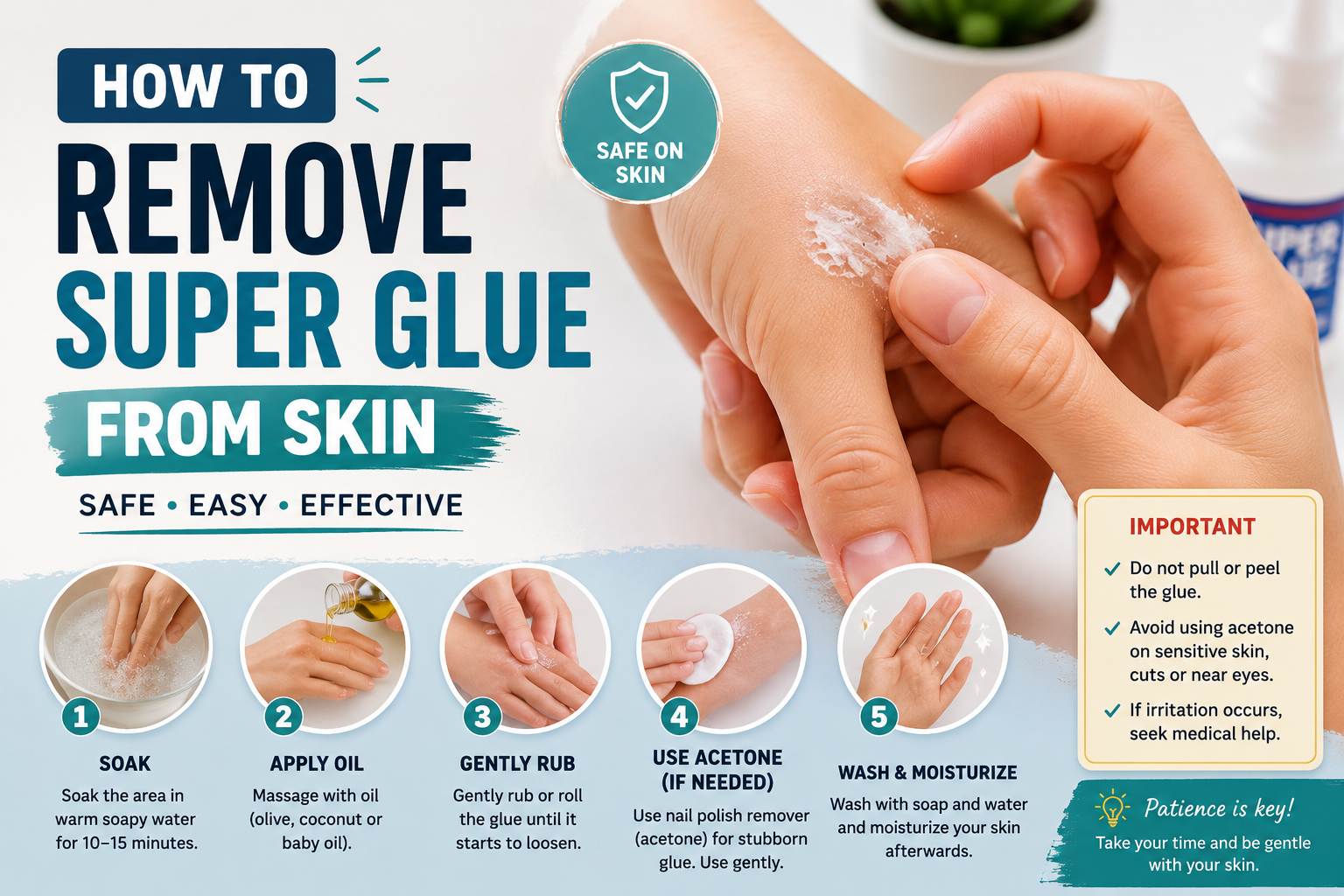
Super glue is one of the most useful household adhesives, but it can quickly become a frustrating problem when it bonds to your skin instead of the object you’re repairing. The good news is that, in most cases, accidentally getting super glue on your fingers or hands is not dangerous. Since the glue bonds to the outer layer of dead skin cells, it usually comes off naturally over time. However, there are several safe techniques that can speed up the process without damaging your skin. This guide explains how to remove super glue from skin safely, what methods work best, what mistakes to avoid, and how to prevent future accidents.
| Key Facts | Details |
|---|---|
| Topic | How to remove super glue from skin |
| Glue Type | Cyanoacrylate adhesive |
| Safe to Remove at Home | Yes, in most cases |
| Best First Step | Soak in warm, soapy water |
| Helpful Products | Acetone, petroleum jelly, cooking oil, hand lotion |
| Avoid | Pulling skin apart forcefully or using sharp tools |
| Removal Time | A few minutes to several hours depending on the amount |
| When to See a Doctor | Large skin injuries, burns, glue near eyes or mouth, allergic reactions |
Understanding Why Super Glue Sticks to Skin
Before learning how to remove super glue from skin, it helps to understand why it sticks so firmly. Super glue, also known as cyanoacrylate adhesive, reacts quickly with moisture. Since human skin naturally contains moisture, the glue cures almost instantly after contact.
Fortunately, the bond usually affects only the surface layer of the skin. As those dead skin cells naturally shed, the glue eventually loosens and falls away. The goal is to speed up this process gently instead of forcing the glue off.
Start with Warm, Soapy Water
The safest and simplest solution is warm, soapy water. This should always be your first option because it softens the hardened glue without irritating the skin.
Fill a bowl with comfortably warm water and add a generous amount of hand soap or dishwashing liquid. Soak the affected area for around 15 to 20 minutes. During soaking, gently rub the skin with your fingers or a soft washcloth.
In many cases, especially if only a small amount of glue is present, this method is enough to loosen the adhesive naturally.
Gently Peel the Glue After Soaking
Once the glue begins to soften, avoid pulling it off forcefully. Instead, slowly roll or peel the edges using your fingertips.
If the glue still feels firmly attached, continue soaking for another 10 to 15 minutes rather than applying more force.
Being patient is one of the most important parts of learning how to remove super glue from skin safely.
Use Acetone for Stubborn Glue
Acetone is one of the most effective products for dissolving cured super glue. It is commonly found in nail polish remover, although not every remover contains pure acetone.
Before using acetone:
- Check that your nail polish remover lists acetone as an ingredient.
Apply a small amount using a cotton ball or cotton swab directly onto the glued area. Let it sit for about one minute before gently rubbing the glue.
After removal, immediately wash the area with soap and water and apply moisturizer because acetone can dry the skin significantly.
Avoid acetone if:
- The skin is broken, irritated, or extremely sensitive.
- The glue is close to the eyes, mouth, or inside the nose.
- The affected person is a young child without medical guidance.
Try Petroleum Jelly
Petroleum jelly works by gradually weakening the bond while keeping the skin moisturized.
Massage a generous layer onto the glued area for several minutes. Continue rubbing gently in circular motions until the adhesive begins separating from the skin.
This method is especially helpful for people with dry or sensitive skin because it causes much less irritation than acetone.
Natural Oils Can Help
Many common kitchen oils can also loosen super glue.
Examples include:
- Olive oil
- Coconut oil
- Vegetable oil
- Baby oil
Massage the oil into the affected area for five to ten minutes. The oil slowly works beneath the adhesive and reduces its grip on the skin.
Although this method may take longer than acetone, it is very gentle and suitable for children under adult supervision.
Butter and Moisturizing Cream
Rich moisturizers containing oils and emollients can soften hardened glue over time.
Apply a thick layer of moisturizing cream or butter and gently massage the skin repeatedly. After several minutes, the glue often starts rolling away in small pieces.
This option works well when only thin layers of glue remain after initial soaking.
Use a Gentle Exfoliating Scrub
If only tiny glue residues remain, mild exfoliation may help.
Mix a small amount of sugar with coconut oil or olive oil to create a gentle scrub. Massage lightly without excessive pressure.
Never scrub aggressively because this can remove healthy skin instead of just the glue.
What to Do if Fingers Are Glued Together
One of the most common accidents involves two fingers becoming stuck together.
Stay calm and avoid pulling them apart suddenly.
Instead:
- Soak the fingers in warm, soapy water.
- Slowly work oil or petroleum jelly into the joined area.
- Gently twist rather than pull the fingers apart.
- Use acetone only if necessary and only on intact skin.
Most fingers can be separated safely with patience.
How to Remove Super Glue from Around Fingernails
Glue often collects around fingernails after home repairs or craft projects.
If you’re wondering how to remove super glue from skin near the nails, soak your fingertips first before applying a small amount of acetone around the edges.
Avoid inserting sharp objects beneath the nail, as this can damage the nail bed and introduce bacteria.
What If Super Glue Gets on Sensitive Skin?
Areas such as the face, lips, or eyelids require extra caution.
Never use acetone near the eyes.
Instead, use warm water compresses and seek medical attention if:
- Eyelids are glued shut.
- Glue enters the eye.
- Glue bonds inside the mouth.
- Breathing becomes difficult.
Healthcare professionals have specialized methods for safely separating glued tissues without causing injury.
Mistakes You Should Never Make
Many people panic and accidentally make the situation worse.
Avoid these common mistakes:
- Pulling glued skin apart forcefully.
- Using knives, razors, or scissors.
- Scraping aggressively.
- Using very hot water that may burn the skin.
- Applying harsh industrial solvents not intended for skin.
These actions often cause more damage than the glue itself.
Can Super Glue Burn Skin?
Although uncommon, super glue can produce heat when it reacts with certain materials like cotton or wool.
If glue contacts cotton clothing or cotton gloves while wet, a chemical reaction may generate enough heat to cause burns.
If you notice warmth, smoke, or burning:
Stop using the product immediately, rinse with cool water, and seek medical care if significant burns develop.
Is It Safe to Leave Super Glue Alone?
Yes.
If only a small amount of glue is present and there is no pain or restricted movement, simply washing your hands normally over the next few days will eventually remove it naturally.
The outer layer of skin constantly sheds, carrying the glue away with it.
Sometimes, doing nothing is the safest solution.
When You Should See a Doctor
Although most cases can be treated at home, certain situations require professional medical care.
Seek medical attention if:
- The glue causes a deep skin tear.
- Large areas of skin are bonded together.
- Glue enters the eyes.
- Glue is swallowed.
- There is severe pain or swelling.
- Signs of infection appear.
- An allergic reaction develops.
Medical professionals have specialized adhesive removers and techniques for complicated cases.
Preventing Future Super Glue Accidents
The easiest way to avoid searching for how to remove super glue from skin is preventing accidents altogether.
Simple precautions include wearing disposable nitrile gloves, working in a well-lit area, keeping tissues nearby, reading product instructions carefully, and storing adhesive away from children.
Many modern super glues now feature precision nozzles that reduce accidental spills, making them easier and safer to use.
Frequently Asked Questions
How long does super glue stay on skin?
Without treatment, it usually falls off naturally within several days as dead skin cells shed.
Does vinegar remove super glue?
Vinegar may soften certain adhesives slightly but is generally much less effective than warm water, oils, petroleum jelly, or acetone.
Can rubbing alcohol remove super glue?
Rubbing alcohol may help loosen small amounts but is usually less effective than acetone for fully cured super glue.
Can toothpaste remove super glue?
Some people report success because of toothpaste’s mild abrasiveness, but it is not considered a reliable or primary removal method.
Is acetone always necessary?
No. Most small glue accidents can be resolved using warm, soapy water, oils, or petroleum jelly without using acetone.
Final Thoughts
Knowing how to remove super glue from skin can save you from unnecessary stress the next time a repair project doesn’t go as planned. In most situations, patience is the key. Begin with warm, soapy water, then move to petroleum jelly, natural oils, or acetone only if needed. Avoid pulling glued skin apart or using sharp tools, as these can cause far more harm than the adhesive itself.
By following the safe methods outlined above, you can handle most super glue accidents at home with confidence. Whether you’re dealing with lightly glued fingertips or a stubborn patch of adhesive, these proven techniques help remove the glue while protecting your skin from unnecessary damage.
Read Also: AO3 Skins: Powerful Guide to Customize Your Reading Experience

